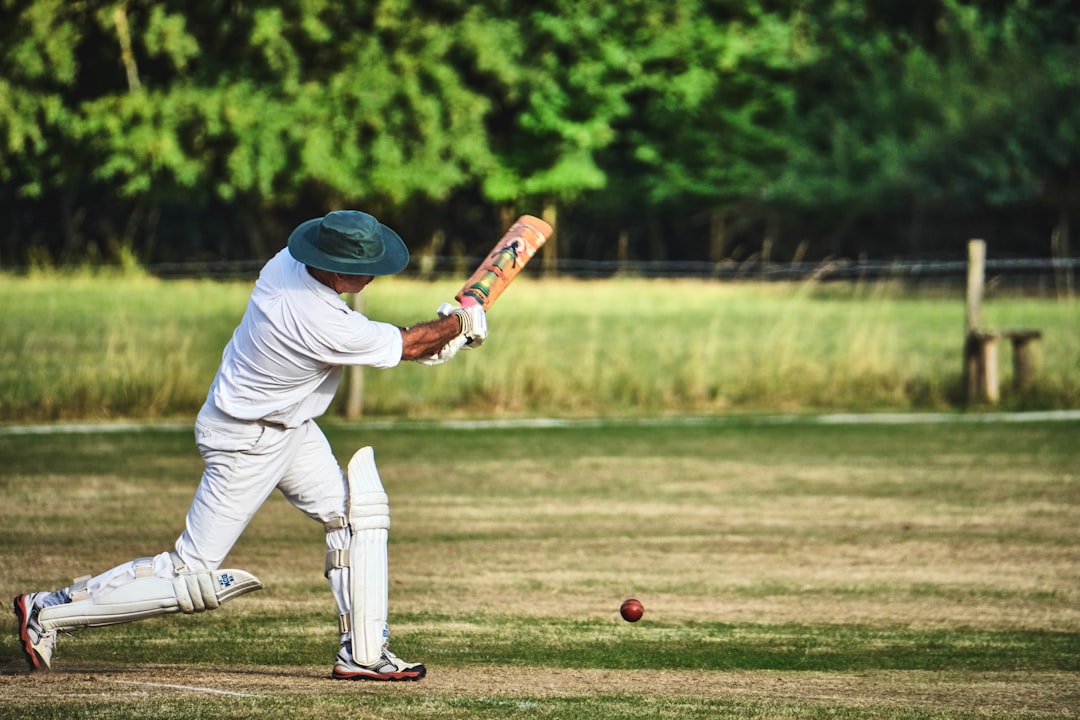
Rahul Dravid faced more deliveries than anyone in the history of Test cricket — upwards of 31,000 — and the overwhelming majority of them were met with a single, repeatable movement: a measured stride forward, head over the ball, bat angled down beside the pad. The front-foot defence wins no highlight packages, yet it is the shot every long innings is built on. Understanding its mechanics reveals why some batters look immovable while others, playing the “same” shot, keep edging to slip.
The Movement, Broken Into Its Parts
The shot begins before the stride. From a balanced set-up — weight even, eyes level — the batter picks up length early and commits forward only to a ball that is full enough to meet near the pitch. The elements then arrive in sequence:
- The stride: a controlled step towards the line of the ball, not a lunge at it. Overstriding locks the front leg and drags the head past the ball’s line.
- The head: it leads everything, moving to a position directly above or fractionally outside the ball at contact. Where the head goes, balance follows.
- The bat: it comes down straight, close to the front pad, with the full face presented and the blade angled towards the ground so the ball is played down.
- The hands: soft — a relaxed bottom hand lets the bat give on contact, killing the ball’s pace so it drops short of the close catchers.
These fundamentals sit on top of a sound base, and any flaw in the grip or stance is magnified under defence, which is why the shot is usually coached alongside the batting stance and grip fundamentals rather than in isolation.
Why the Gap Between Bat and Pad Decides Everything
Ask any coach what dismantles a defence and the answer is “the gate” — the gap between the inside edge and the front pad. A ball that nips back through that gap hits the stumps; a bat hanging away from the pad also exposes the inside edge to the delivery that seams in. The classical remedy is playing the bat and pad together, close enough that nothing fits between them, with the bat marginally in front so the ball strikes willow first and an LBW shout never arises.
The opposite error is just as costly. A defensive push with hard hands and the bat well in front of the body turns a good-length ball into catching practice: the edge carries to the cordon rather than dying in front of it. This is where soft hands earn their reputation. The great defensive players — Dravid, Geoffrey Boycott, Alastair Cook, who retired as England’s leading Test run-scorer — allowed the ball to come to them and met it under their eyes, a principle that anchors the broader craft of building a Test match innings ball by ball.
Adjusting the Shot for Pace and for Spin
Against seam bowling, the front-foot defence is mostly a question of line and late contact. The batter plays as late as possible, inside the line of anything angled across the body, and leaves the head still through contact. Against genuine pace the stride shortens — there is simply less time — and balance matters more than reach.
Spin rewrites the calculation. Now the threat is not pace but deviation after pitching, so the batter must either get fully forward, smothering the turn near the pitch of the ball, or go fully back and play it late off the surface. The half-forward prod — trapped on the crease, playing at the ball a foot in front of the pad — is the dismissal spinners fish for. Getting to the pitch depends on decisive movement, and the footwork patterns for playing spin bowling exist largely to protect the defensive shot. On turning surfaces many batters also defend with the bat face slightly closed or open to direct the ball into gaps, killing any bat-pad catch.
Modern analysis has added one more nuance: the defence is a scoring shot’s twin. A batter with a trusted defence can leave and block until the bowler errs, which is why sides that dominate long formats defend well as a collective. Records of the marathon rearguards that saved Test matches — innings lasting ten hours and more — fill the archives at ESPNcricinfo, and nearly all of them were built on this one shot.
Drills That Actually Transfer
Three practice methods have survived every fashion cycle in coaching:
- Shadow work with a mirror or camera: checking head position and bat-pad proximity without a ball removes the panic variable.
- Underarm throw-downs on a length: the feeder aims at a coin on the pitch; the batter must defend the ball into the ground within a marked semicircle, training soft hands.
- The one-stump gate drill: a stump laid alongside the front foot’s landing zone penalises any gap between bat and pad with an audible clip.
Each drill isolates a single failure point — head, hands, gate — because a defence rarely breaks down in more than one place at a time.
What a Sound Defence Buys a Batter
The front-foot defence is not an end in itself; it is the price of admission to everything else. A batter who cannot be dismissed defending forces bowlers to change length, and a change of length is the origin of every drive and pull. That is the quiet economy of the shot: it scores nothing directly, yet it manufactures the loose ball. Watch a top-order batter early in a red-ball innings and count the defensive shots before the first boundary — the ratio explains itself. The players who last thirty balls score the runs that matter after the sixtieth, a truth explored across the full range of strokes in this complete guide to cricket batting technique.
Frequently Asked Questions
How does the front-foot defence start?
The technique begins with a balanced stance, weight evenly distributed and eyes level. The batter reads the ball’s length early, then commits to a forward stride only when the delivery is full enough to meet near the pitch.
What role does the head play?
The head leads the movement, positioning directly above or slightly outside the ball at contact, which ensures balance and guides the stride and bat alignment, preventing overstriding and maintaining stability throughout the defensive shot.
Why is overstriding problematic?
Overstriding locks the front leg and drags the head past the ball’s line, causing loss of balance, reduced control of the bat, and increased risk of edging onto the slip, undermining the defence’s effectiveness.
How does bat positioning affect the defence?
The bat drops straight, close to the front pad with the full face presented, allowing the ball to travel securely between bat and pad. This alignment minimizes gaps, reduces edges, and maximizes control for a solid defensive shot.