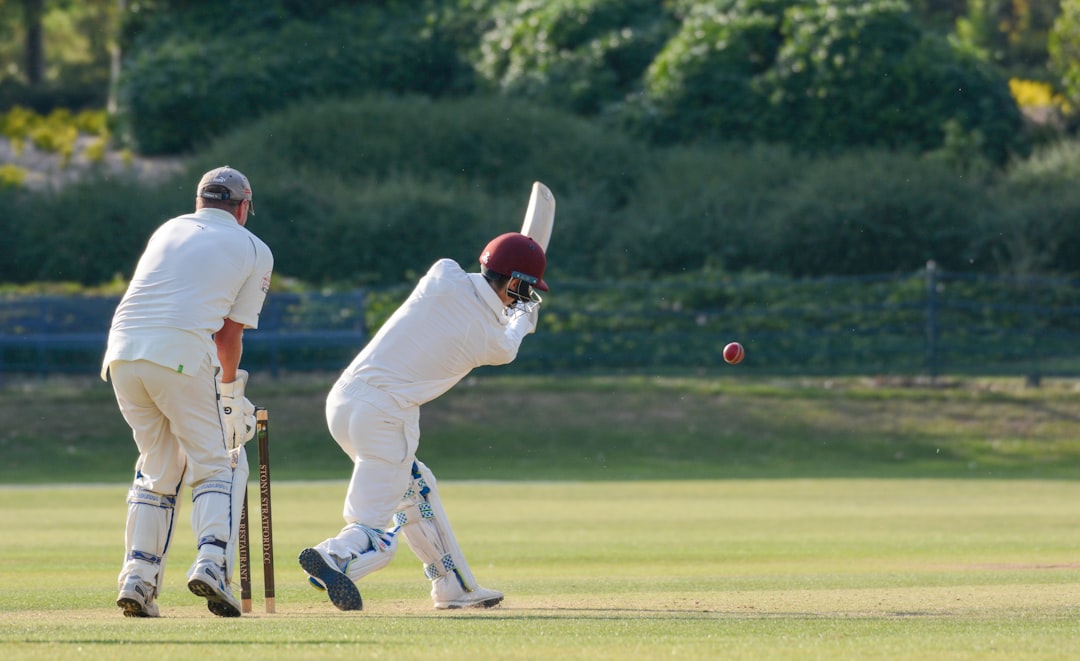
Shane Warne took 708 Test wickets, and a striking number of them fell not to the big-ripping leg-break but to the ball that did nothing sideways at all. The top-spinner — released from a leg-spinner’s hand yet spinning forwards over its own axis — dips late, lands shorter than the batter expects, and climbs at the splice. It is the least glamorous ball in a wrist-spinner’s kit and, bowled well, arguably the most quietly destructive, because it punishes the one thing batters rely on most: their read of length.
What Overspin Actually Does to the Ball
Every spinning ball obeys the same aerodynamics. Side-spin makes a delivery drift and turn; overspin — the seam rotating forwards, top of the ball moving in the direction of travel — makes it dip. The Magnus effect pushes a forward-spinning ball downwards through its flight, so a top-spinner leaves the hand on the trajectory of a full delivery and then drops, pitching a foot or more shorter than the batter’s first estimate. Because the ball is spinning down the pitch rather than across it, all that rotational energy converts to forward kick and bounce off the surface instead of sideways turn.
The practical result is a three-part deception: shorter than it looks, quicker off the pitch than it looks, and bouncing higher than it looks. Batters lunging forward to what they judged a half-volley find the ball spitting at the shoulder of the bat. The physics of dip and drift across the spinner’s whole repertoire is unpacked further in this piece on flight and drift in spin bowling.
The Grip and the Wrist Position
For a leg-spinner, the top-spinner uses the standard two-fingers-up, two-down leg-break grip; the change is entirely in the wrist and seam orientation at release. Where the leg-break is released with the wrist cocked so the seam points roughly towards slip, the top-spinner is delivered with the back of the hand turned further round, seam rotating end-over-end towards the batter. Think of the leg-break, googly and top-spinner as points on a dial: the leg-break at one end, the googly with its fully reversed wrist at the other, and the top-spinner sitting halfway between them.
Finger-spinners bowl their own version. An off-spinner who rolls the fingers over the top of the ball rather than around it produces overspin with little turn — the classic “one that goes straight on with bounce”. Anil Kumble, who finished with 619 Test wickets, built an entire career on this family of deliveries: bowled at brisk pace with relentless overspin, his stock ball hurried batters on the back foot and won LBWs and bat-pad catches without ever needing to rip square. The full landscape of wrist positions is catalogued in this survey of spin bowling grips and variations.
When and Why Bowlers Deploy It
The top-spinner is rarely a stand-alone weapon; it is a sentence that only makes sense in the paragraph of an over. Its main jobs:
- Setting up the LBW and bowled: after several leg-breaks turning past the edge, a batter starts playing for turn. The top-spinner holds its line, and the batter playing outside the ball is beaten on the inside edge.
- Punishing the charge: against a batter using their feet, the extra dip makes the ball land shorter than the eye promises. Many stumpings credited to “flight” are really overspin doing its work.
- Extracting life from dead pitches: on slow, low surfaces where side-spin sits up gently, overspin is the only way a spinner manufactures awkward bounce.
- Attacking the splice: the climbing ball takes the shoulder of a defensive bat and lobs to short leg or silly point.
Warne’s use of the ball as a set-up — documented across countless match analyses at ESPNcricinfo — followed a recognisable pattern: leg-breaks to drag the batter across the crease, then the top-spinner arrowed at middle stump. The batter, committed to covering turn that never came, was struck plumb in front. The craft of the wider leg-spin art it belongs to is examined in this study of Shane Warne and the art of leg-spin.
Reading It From the Other End
Picking the top-spinner is a batter’s problem with three partial solutions. From the hand, the seam appears to rotate towards the batter rather than angled across — visible only to those trained to watch the seam, not the hand’s blur. In the air, the giveaway is trajectory: a ball that seems to hang, then falls more steeply than a leg-break of the same speed. Off the pitch, it is already too late to adjust; the batter’s only insurance is technique — playing late, under the eyes, with soft hands so the flier off the splice drops safely.
The percentage response, coaches agree, is to treat any suspected top-spinner as shorter than it looks: go fully back, ride the bounce, and play it down. Committing forward on a guess is precisely the error the delivery is designed to harvest.
The Measure of a Complete Spinner
A wrist-spinner with only a leg-break is a puzzle batters eventually solve; the top-spinner is what stops the solving. It converts the batter’s hard-won read of length into a liability and turns flat pitches from a sentence into a canvas. That is why coaches watching a young leg-spinner look past the size of the turn and ask a quieter question: what does the ball do when it doesn’t turn? The answer — dip, bounce, hurry — usually decides how far the bowler goes.
Related: 10 Analytical Insights into The Big Bash League Explained: Structure, Stars, Strategies, and Impact
Frequently Asked Questions
What is a top-spinner in cricket?
A top‑spinner is a delivery bowled by a wrist‑spinner in which the ball rotates forward around a horizontal axis, rather than sideways. The forward spin causes the ball to dip in flight and bounce higher after pitching.
How does overspin affect ball flight?
Overspin makes the seam rotate in the direction of travel, creating a Magnus effect that pushes the ball downward. This forward rotation reduces lift, causing the ball to drop earlier and land shorter than a normally spun delivery.
Why does a top-spinner dip shorter?
The top‑spinner dips because forward spin converts rotational energy into vertical force. As the ball travels, the Magnus effect pulls it down, so it lands a foot or more before the batsman's expected length, making timing difficult.
What advantage does a top-spinner give wrist spinners?
A wrist‑spinner gains extra forward kick from a top‑spinner, as the spin energy is directed into bounce rather than sideways turn. This can surprise batters reliant on length, delivering steeper bounce and quicker runs after pitching.