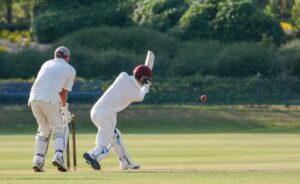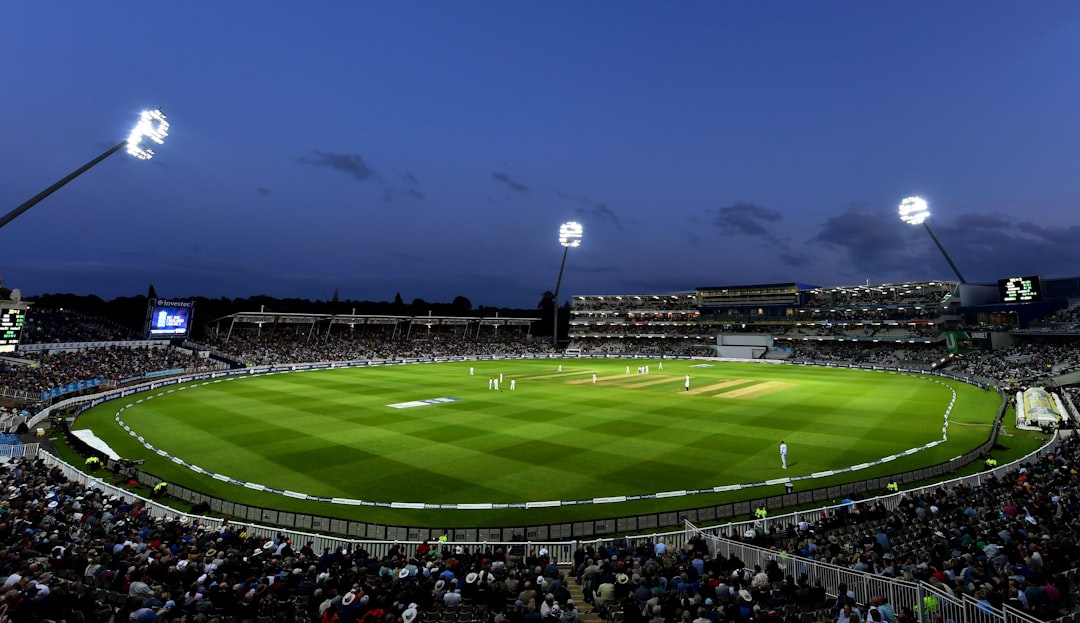
When the Decision Review System was first trialled in a Test between India and Sri Lanka in 2008, it was sold as a way to eliminate the howler — the obviously wrong decision that swings a match. Nearly two decades on, DRS has done that, but it has also created a vocabulary that confuses casual viewers every week: ball-tracking, Umpire’s Call, the spike on UltraEdge, the three reds and the three not-outs. This is a plain explanation of what each part of the system measures, where it is reliable, and where it still leaves room for argument.
The three technologies that feed a review
DRS is not a single machine. It is a bundle of independent technologies that the third umpire consults in sequence, and understanding a review means knowing what each one does.
- Ball-tracking (marketed as Hawk-Eye or Virtual Eye) uses several high-frame-rate cameras around the ground to triangulate the ball’s position frame by frame, then projects its predicted path after it strikes the pad. This is what produces the LBW graphic.
- Edge detection comes in two forms. UltraEdge (a refined real-time Snickometer) pairs the stump microphone’s audio waveform with synchronised video, so a spike that lines up with the exact frame the ball passes the bat indicates contact. Hot Spot, an infra-red camera, shows a bright mark where friction is generated on impact.
- Slow-motion and split-screen video handles the simpler questions: clean catches, bump balls, stumpings and run-outs, where frame-by-frame replay alone settles it.
A single LBW review can call on all three: video to check the ball did not hit the bat first, UltraEdge or Hot Spot to confirm there was no inside edge, and ball-tracking to judge the leg-before itself.
Why an LBW needs three boxes to go red
For a leg-before decision, ball-tracking answers three separate questions, and all three must favour the bowling side for an on-field not-out to be overturned to out:
- Pitching — did the ball pitch in line with the stumps or outside off stump? (Pitching outside leg stump is always not out.)
- Impact — did the ball strike the pad in line with the stumps?
- Wickets — was the ball going on to hit the stumps?
Each of these appears as a graphic during the review. Three reds means the ball was doing everything a dismissal requires; a single not-out on any of the three keeps the batter in. This is also where the most common viewer confusion begins, because the on-field umpire’s original call still matters.
Umpire’s Call: the rule everyone argues about
Umpire’s Call is the single most misunderstood part of DRS. The principle is that ball-tracking is a prediction, not a measurement, so the system builds in a margin of uncertainty. For the ‘wickets’ zone, the ball must be shown clipping more than 50 percent of the outer stump for a not-out to be overturned. If less than half the ball is hitting, the graphic reads Umpire’s Call, and the original on-field decision stands — out stays out, not out stays not out.

This produces the situation that frustrates fans: two near-identical balls can yield opposite results purely because one umpire said out and the other said not out. It is not a malfunction. It is a deliberate acknowledgement that no projection is perfect, and that the on-field umpire should retain the benefit of the doubt in marginal cases. Whether that margin should exist at all is a genuine debate within the game’s governance, not a glitch in the technology.
Reviews, limits and the captain’s calculation
Each side gets a set number of unsuccessful reviews per innings — the figure has shifted over the years and across formats, and was raised during the period when neutral umpiring was suspended — after which they must accept the on-field call. A review must be requested within 15 seconds of the decision, signalled with a T to the umpire. An Umpire’s Call result does not cost the team its review, which rewards a well-judged marginal challenge.
That turns DRS into a tactical resource as much as a technical one. Burning both reviews on hopeful appeals in the first hour can leave a fielding side defenceless when a genuine howler arrives at a crucial moment. The best captains treat reviews like a scarce bowling change: spent on conviction, not hope.
What the system still cannot settle
DRS has sharply reduced clear errors, but it has limits. Faint edges can fall below the threshold where audio and infra-red agree. Low catches close to the turf remain hard to judge even with multiple angles, which is why many are referred with a soft signal from the on-field umpires. And ball-tracking depends on a clean read of the delivery; deflections very close to the pad give the cameras little to work with. The technology narrows the grey area — it does not erase it.
For the official protocols and the current playing conditions that govern reviews, the International Cricket Council publishes the regulations that broadcasters and boards work from. For more on how these rules are set and contested, see our coverage of cricket governance, and for how teams use technology and data to plan dismissals, our cricket tactics and strategies archive goes deeper on the thinking behind the appeals.
What to watch next time
The next time a review goes upstairs, follow the order the third umpire follows: first the question of a bat-first contact, then the three LBW zones, then the size of the margin on the stumps. Once you can read those graphics in sequence, the drama of a review stops being a mystery and becomes what it was designed to be — a transparent, if imperfect, second look. The open question for the game is not whether the technology works, but how much certainty it should be asked to deliver before the umpire’s original judgement is set aside.
Frequently Asked Questions
What is ball‑tracking in cricket DRS?
Ball‑tracking uses multiple high‑frame‑rate cameras positioned around the ground to triangulate the ball’s position each frame, then extrapolates its trajectory after impact to show the predicted path for LBW decisions.
How does UltraEdge determine an edge?
UltraEdge combines audio from the stumps’ microphone with synchronized high‑speed video, creating a waveform where a sharp spike that aligns with the exact video frame indicates a possible bat‑ball contact, helping judges identify edges.
What is the ‘Umpire’s Call’ in DRS?
Umpire’s Call is the margin of error applied when technology does not give a clear decision; if the ball‑tracking or edge detection falls within a predefined tolerance, the original on‑field call stands, preserving the umpire’s authority.
Why can DRS still be controversial?
DRS remains controversial because ball‑tracking predictions rely on extrapolation beyond the point of impact, edge detection can miss faint contacts, and the tolerance thresholds differ between formats, leading to disagreements when marginal calls are upheld or overturned.