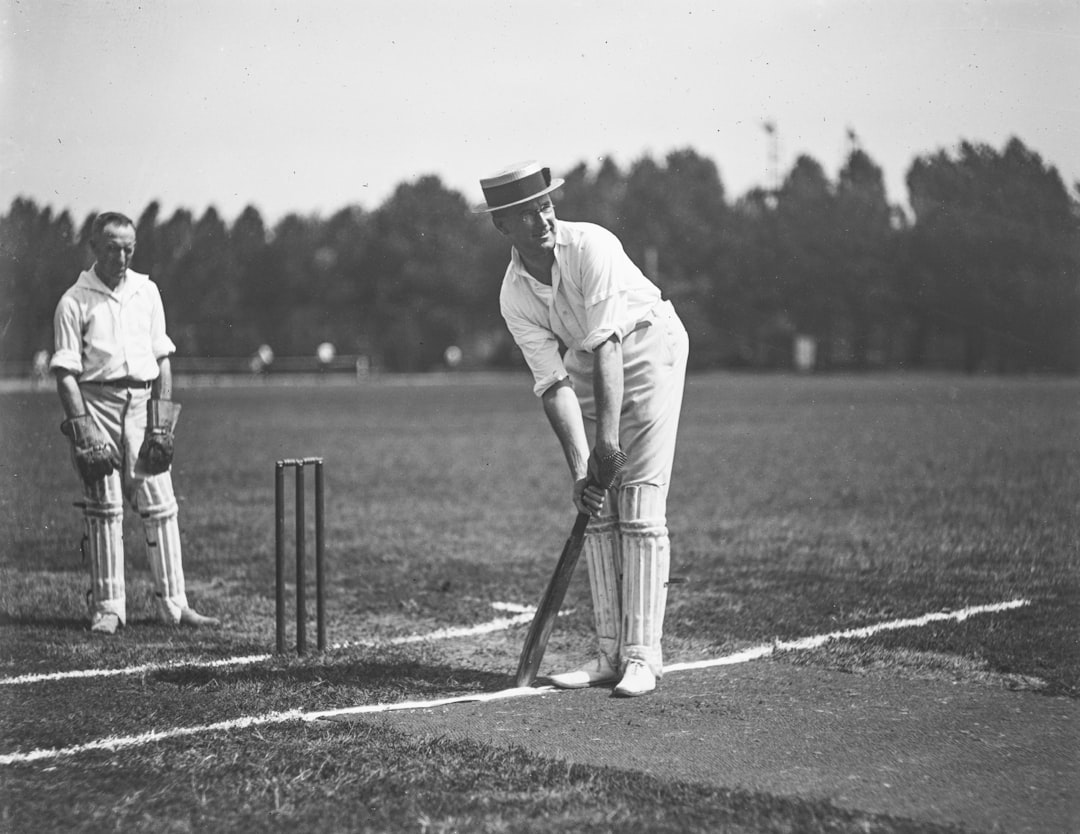
From Dhaka’s Alleyways to the Caribbean Breeze
Echoes Golden Era: is the focus of this guide. When I think back to the humid evenings of 1970s Dhaka, the city’s narrow lanes seemed to pulse with a rhythm that was unmistakably cricket‑driven. Television was a luxury, its monochrome screen flickering only on rare occasions. For most of us, the soundtrack of the game arrived not through a visual medium but through the crackling waves of the radio. The tiny transistor in my pocket became a portal, transporting me from the teeming streets of Dacca to the sun‑kissed pitches of Jamaica, the bustling grounds of Calcutta, and the quiet greens of English county fields.
The experience was intimate. Radio commentators had to paint the entire match with words, turning every lofted drive, every edge, every daring run into a vivid tableau for listeners whose only visual cues were the occasional crowd roar captured by the microphone. This reliance on auditory storytelling forged a generation of fans who could visualize a delivery purely through description, a skill that now feels almost anachronistic in the age of high‑definition replay.
Karachi to Kingston: The Unlikely Journey of a Young Fan
My earliest recollection of a truly international cricket broadcast dates to March 1985, when Bangladesh Television (BTV) managed a live telecast of the India‑Pakistan ODI final in Australia. The image on the small screen was grainy, the commentary a hurried mix of Hindi, Urdu, and English, but the significance was monumental: it was the first glimpse of a full‑scale international showdown from my homeland.
Before that, my cricket diet was seasoned with the rhythmic cadence of Akashbani—All India Radio’s Calcutta and Agortola stations. These stations would relay Indian matches both home and abroad, often with a half‑hour delay that felt like a curated highlight reel. In the spring of 1983, as Kapil Dev led a youthful Indian side on a Caribbean tour, I found myself glued to the radio, waiting for the distinctive timbre of the Calcutta commentary to guide me through the tropical atmosphere of Sabina Park, Jamaica.
The first Test at Sabina Park began at 15:00 GMT, translating to a late evening back in Dhaka. We caught the live pre‑lunch session, but the rest of the day’s action arrived as a taped segment in the early hours of the following morning. The transmission quality of the medium‑wave signal was often erratic; static would swell like a sea tide, drowning out crucial moments. It wasn’t until the third morning—Saturday evening in Dhaka—that I finally heard the full, uninterrupted commentary, thanks to the BBC’s “Saturday Special.” I later discovered that the legendary Guyanese voice of Joseph “Reds” Pereira was behind the broadcast, a detail that added a layer of reverence to the experience.

The Magic of Viv Richards: A Personality Beyond the Boundary
Amid the haze of static and delayed feeds, one name rose above the rest—Sir Vivian Richards. The West Indian maestro was not merely a batsman; he was a cultural phenomenon, a larger‑than‑life figure whose swagger and dominance redefined what a cricketer could be. While images of his explosive strokeplay were few on the small television screens of the era, the radio allowed listeners to imagine each shot with a clarity that surpassed any visual representation.
Richards’ confidence was palpable even through the airwaves. When he’d saunter to the crease, the commentator’s voice would soften, as if acknowledging the arrival of a sovereign. The rhythm of his batting—those thunderous drives and nonchalant pulls—was translated into a symphony of sounds: the thud of the ball off the bat, the roar of the crowd, the brief hush before the wickets fell. For a young fan in Dhaka, Richards became an archetype of fearless brilliance—a daring rebel whose every innings was a lesson in self‑belief.
The Evolution of Cricket Broadcasting: From Radio Waves to Digital Streams
Fast forward four decades, and the cricketing audience is now served by a cornucopia of platforms: live video streams, interactive statistics, augmented reality replays, and social media commentary. While the immediacy and visual fidelity of modern broadcasts are undeniably impressive, they also mask an essential element that radio preserved—the art of narrative.
Today’s commentators often rely on instant replays to supplement their analysis, allowing viewers to see exactly what happened. In the radio era, the commentator’s description was the sole medium through which fans could understand the nuances of a delivery—its seam position, swing, the batsman’s stance, the fielders’ positioning. This necessity cultivated a generation of fans with a deeper technical appreciation of the game, capable of dissecting a bowler’s action or a batsman’s footwork without ever seeing a single frame.
According to crictracker.com, the resurgence of “audio‑first” content—podcasts, live‑audio commentary on streaming services—suggests a renewed appetite for the immersive storytelling that radio once mastered. Modern platforms are now blending the visual with the auditory, offering fans the option to turn off video and listen, echoing the nostalgia of an earlier era while leveraging contemporary production quality.
Preserving the Legacy: Why Radio Stories Matter Today
The radio days were not just a technological limitation; they were a cultural crucible that forged a unique bond between the sport and its followers. This bond is evident in the way many of us recall the crackle of the transmitter as fondly as we remember a six soaring over the boundary. The stories told in those moments have become part of cricket’s oral history—a living archive that continues to inspire.

For younger fans unfamiliar with this era, the challenge is to convey the romance of listening to a match unfold in the dark, the excitement of guessing the ball’s trajectory based on a commentator’s voice, and the communal experience of families gathering around a single speaker. Projects by cricket boards to digitize old radio commentaries and make them available on streaming platforms are steps toward bridging the generational gap.
Moreover, the emphasis on vivid description can enrich contemporary broadcasting. Even with sophisticated graphics, a commentator’s ability to evoke emotion through words remains vital. The best modern narrators blend technical insight with storytelling, a skill honed by their forebears who had no visual crutches.
Personal Reflections: How Those Days Shaped My Understanding of the Game
Listening to cricket on radio taught me patience. Delays in transmission meant that I often had to hold my breath, waiting for the next segment while my imagination filled the gaps. This cultivated a reflective approach to the sport—an appreciation for each ball as a piece of a larger narrative rather than a fleeting highlight.
It also taught me the value of community. In Dhaka’s bustling neighborhoods, groups would huddle around a shared radio, exchanging banter and predictions, creating a shared experience that transcended individual consumption. That collective excitement is something that, even today, large stadiums and online fan forums strive to replicate.
In many ways, the radio era was a crucible that forged the cricketer’s mythology and the fan’s devotion. Legends like Viv Richards were not merely seen; they were heard, felt, and internalized through the power of voice. The echoes of their exploits still reverberate in the minds of those who, like me, grew up amidst the static and anticipation.
Frequently Asked Questions
Why was radio commentary so important for cricket fans in the 1970s and 1980s?
Television coverage was scarce and often limited to short highlights. Radio provided live, real‑time narration, allowing fans to follow entire matches and develop a deep, imaginative connection with the game.
How did commentators convey the excitement of a fast bowler’s delivery without visuals?
They used vivid language, describing the bowler’s run‑up, the seam position, the swing, and the crowd’s reaction. The cadence and tone of their voice added drama, turning each ball into an audible spectacle.
What made Viv Richards a unique figure for listeners of that era?
Richards’ charismatic swagger and aggressive batting style were amplified by the commentator’s storytelling. Listeners felt his dominance through the commentator’s reverent tone, turning every inning into a legend‑building narrative.
Can modern cricket broadcasting learn anything from the radio era?
Yes. Emphasizing descriptive storytelling alongside visual analysis can enrich the viewing experience. Audio‑first platforms and podcasts are reviving the art of immersive narration.
How are historical radio commentaries being preserved today?
Cricket boards and archives are digitizing old recordings, making them accessible on streaming services and podcasts, ensuring that the rich oral heritage of cricket remains available for future generations.