A bowler delivers the ball, the batter pads it away, and the fielding side erupts in a unanimous appeal — and in that single moment, half a dozen Laws are working at once: the legality of the delivery, the position of the batter’s leg, the line of the stumps, and the umpire’s judgement of where the ball would have travelled. Cricket can look bewildering from the boundary precisely because so much is governed by codified rules that have been refined over more than two centuries. This guide walks through those rules in plain language, section by section.
Quick answer:
The Laws
Who Writes the Rules: The MCC and the Laws of Cricket
Cricket is unusual among major sports in that its rules are not called “rules” at all — they are formally titled the Laws of Cricket. The custodian of these Laws is the Marylebone Cricket Club (MCC), based at Lord’s in London, which has owned and maintained the Laws since the eighteenth century. While the International Cricket Council (ICC) governs the global game and runs international competitions, it does not write the Laws themselves; instead, the ICC adopts the MCC Laws and layers its own playing conditions on top of them for international matches. You can read the full, authoritative text on the MCC’s official Laws of Cricket pages.
This distinction matters because it explains why the same sport can be played slightly differently in different formats. The Laws define the permanent framework — what a wicket is, how a batter is out, what counts as a fair delivery. Playing conditions then adjust details such as the number of overs, fielding restrictions, and the use of technology. When a Test match and a Twenty20 game appear to follow different rules, they are almost always sharing the same underlying Laws while applying different competition-specific conditions. The Laws are periodically revised, and the MCC consults widely before any change, but the core principles have remained remarkably stable.
The Field, the Pitch, and the Equipment
A cricket ground is roughly oval and has no fixed size, which is itself a quirk of the game — boundaries vary from venue to venue. At the centre lies the pitch, a carefully prepared rectangular strip 22 yards (about 20.12 metres) long between the two sets of stumps. At each end stand three wooden stumps topped by two small bails; together they form the wicket. The bails are central to many decisions, because a wicket is generally only “put down” when at least one bail is dislodged from the top of the stumps.
Lines marked on the pitch define legality and safety. The popping crease (or batting crease) is the line a batter must stay behind to avoid being stumped or run out, and the line a bowler’s front foot must not entirely overstep when delivering. The bowling crease runs through the stumps, and the return creases mark the sides. Understanding where a batter is “in” their ground — that is, some part of the bat or body grounded behind the popping crease — is essential to following run-outs and stumpings.
Equipment is also regulated. The bat must fall within defined limits of length, width, and thickness, and must be made principally of wood. The ball is a hard, cork-cored sphere wrapped in leather with a raised stitched seam, and its weight and circumference are tightly specified. Batters wear pads, gloves, and a helmet for protection, while the fielding side has just one player permitted to wear large external gloves and external leg guards — the wicketkeeper, who stands behind the stumps at the striker’s end. The Laws even regulate how worn or damaged balls may be replaced and when a new ball becomes available in the longer format.

Scoring Runs, Boundaries, and Extras
The object for the batting side is to score runs, and the most common way is for the two batters to run between the wickets after the striker hits the ball, each completed exchange of ends counting as one run. If the ball reaches or crosses the boundary along the ground, the batting side is awarded four runs; if it clears the boundary on the full, without bouncing, they are awarded six. Runs scored off the bat are credited to the individual batter.
Not all runs come from the bat. Extras (sometimes called “sundries”) are runs added to the team total but not to any batter’s score, and they fall into recognised categories. A wide is signalled when the ball passes out of the batter’s reach in a normal stance and is too wide or too high to be hit, penalising the bowler with a run and an extra delivery. Byes are runs taken when the ball passes the striker without touching the bat or body, while leg byes are runs taken when the ball deflects off the batter’s body (but not the bat) under specific conditions. The no-ball is the most consequential extra, and it deserves its own treatment below because of its link to free hits and fielding restrictions.
Because every run and every extra is recorded, the scorecard becomes a precise ledger of the match. A close finish often hinges on a single bye or a misjudged wide, which is why the Laws define each category so carefully.
How Batters Get Out: The Methods of Dismissal
The Laws recognise several distinct ways a batter can be dismissed, and a fielding side must usually appeal — traditionally with the call “How’s that?” (howzat) — before an umpire will give a batter out. The most frequent dismissals are bowled, caught, leg before wicket, run out, and stumped, but the full list is broader, and our overview of the different ways a batter can be dismissed covers each in detail.
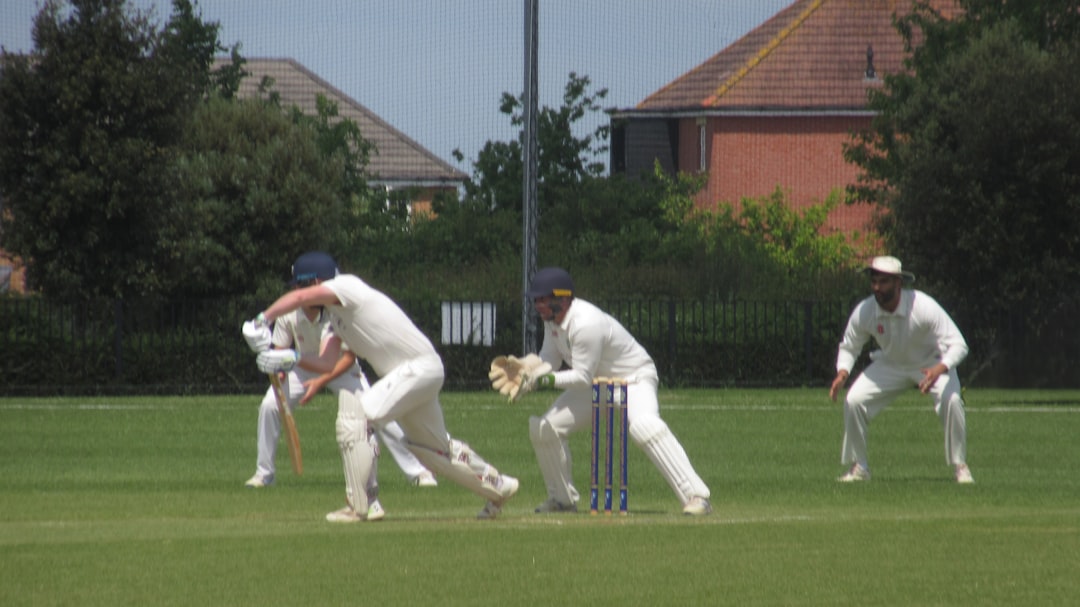
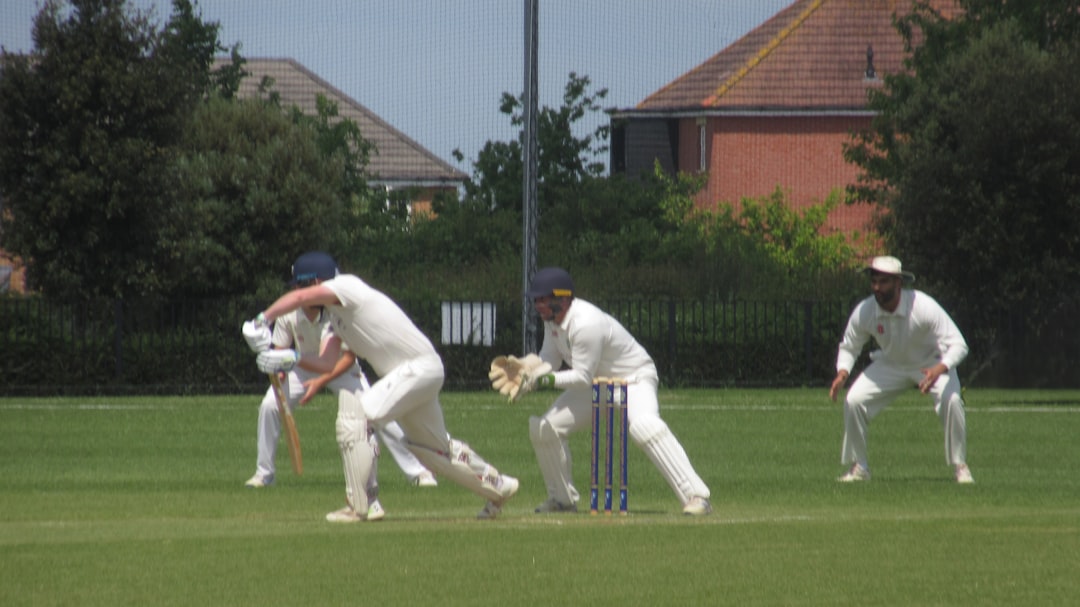
Bowled is the simplest: the delivery hits the stumps and dislodges a bail, regardless of whether it first touched the bat or pad. Caught occurs when a fielder cleanly catches the ball after it has touched the striker’s bat (or glove holding the bat) before it touches the ground. A run out happens when the wicket is put down while the batters are attempting a run and a batter is out of their ground. A stumping is effected by the wicketkeeper when the striker steps out of the crease, misses the ball, and is out of their ground with no attempt at a run.

Leg Before Wicket and the Trickier Dismissals
Few decisions generate as much debate as leg before wicket (LBW). In essence, a batter can be out LBW if the ball would have gone on to hit the stumps but was intercepted by the batter’s body — usually the pad — rather than the bat, subject to conditions about where the ball pitched and where it struck the batter. The interplay of line, pitching point, and whether the batter offered a shot makes it one of the game’s most nuanced calls; our breakdown of how the LBW law is adjudicated unpacks each condition. Less common dismissals include hit wicket (the striker disturbs their own stumps while playing or setting off for a run), obstructing the field, and being out for handling the ball, which the Laws now fold into obstruction. Each carries its own precise criteria, and an umpire applies them strictly because a wrongly given or wrongly refused wicket can decide a contest.
The No-Ball, the Free Hit, and Bowling Restrictions
The no-ball is the Law that most directly polices the bowler. It is called for several reasons: overstepping the popping crease with the front foot so that no part of it is behind the line, a back foot landing on or outside the return crease, throwing rather than bowling the ball (an illegal action), a delivery that bounces too many times or rolls along the ground, or a ball deemed dangerously high or short. A no-ball adds a run to the total, the delivery does not count toward the over, and the batter cannot be out by most methods off it (though run-outs remain possible). The full set of conditions, including how umpires judge a fair delivery, is laid out in our explainer on what counts as a no-ball and how the free hit works.


In limited-overs cricket, a no-ball is often followed by a free hit, a playing condition under which the next legal delivery carries no risk of most dismissals for the batter, encouraging an aggressive shot. This is a competition rule rather than a permanent Law, but it has become a familiar feature of white-ball formats. Bowling is further governed by the structure of the over — six legal deliveries bowled consecutively from one end — and by limits on how many overs a single bowler may send down in limited-overs games. The cumulative effect of these restrictions is to balance the contest between bat and ball across an innings.

Powerplays, Fielding Restrictions, and Over-Rates
While Test cricket places few restrictions on where fielders may stand, limited-overs formats use powerplays to shape the rhythm of an innings. During a powerplay, only a small number of fielders are permitted outside the inner fielding circle, which favours the batting side and typically produces faster scoring in the opening overs. As the powerplay ends, more fielders are allowed back to the boundary, and captains adjust their tactics accordingly. The detailed structure, including how many fielders are allowed out at each phase, is covered in our guide to how powerplay restrictions work in limited-overs cricket.
Field placement itself is a tactical language, and learning the names of the positions — slip, gully, point, cover, mid-on, fine leg, and many more — helps a viewer read a captain’s intentions before a ball is bowled. Our reference on the standard cricket fielding positions and what they signal maps the field so that the geometry of an innings becomes legible.
The Laws and playing conditions also address the over-rate — the pace at which a fielding side bowls its overs. Slow over-rates can attract penalties, and in some formats a side that fails to complete its overs in time must keep an extra fielder inside the circle. These provisions exist to protect the spectacle and to stop a fielding team from gaining an unfair advantage by simply slowing the game down.
Innings Structure, the Follow-On, and Rain Interruptions
How an innings begins and ends depends on the format. In Test and first-class cricket, each side may bat across two innings, and the team batting first can, under defined circumstances, enforce the follow-on — asking the trailing side to bat again immediately rather than batting itself. The follow-on can be a powerful tactical weapon, but it carries risk, as a determined batting performance can flip a match; the conditions and strategy are set out in our look at when and how the follow-on can be enforced.
Weather is cricket’s perennial complication, and limited-overs matches need a fair way to reset targets when rain steals overs. The widely used solution is the Duckworth–Lewis–Stern (DLS) method, a mathematical system that adjusts the target according to the overs and wickets remaining, on the principle that a team’s scoring potential depends on both resources. It frequently decides rain-affected results, and our explanation of how the Duckworth–Lewis–Stern method recalculates targets shows why the revised figure is rarely a simple run-rate calculation.



When a limited-overs knockout match is tied, many competitions resolve it with a Super Over — a single additional over for each side to settle the result. It is a high-pressure mini-innings with its own conditions on batting order and dismissals, and our walkthrough of how a Super Over decides a tied match covers exactly how the tiebreaker plays out. These provisions ensure that, whether the interruption is rain or a deadlock, the game has an orderly way to reach a conclusion.
Umpires, Appeals, and the Decision Review System
On the field, two umpires control the match — one standing at the bowler’s end and one at square leg — and their authority over matters of fact and Law is considerable. They signal boundaries, no-balls, wides, byes, and dismissals, and they alone decide on appeals. In professional cricket a third umpire, watching television replays, assists with line decisions such as run-outs and stumpings, and with catches that are difficult to judge from the middle. A match referee oversees conduct and discipline but does not adjudicate playing decisions.
Technology has been formalised through the Decision Review System (DRS), a playing condition that lets players challenge an on-field umpire’s decision a limited number of times per innings. DRS draws on several tools: ball-tracking to predict the path of the ball for LBW reviews, edge-detection technology (such as sound-based or thermal systems) to determine whether the ball touched the bat, and slow-motion replays to inspect close catches and run-outs. A central concept is “umpire’s call,” under which a marginal LBW decision stands with the on-field umpire if the ball-tracking shows only a glancing contact with the stumps. DRS does not aim for perfection so much as the elimination of clear, obvious errors, and it has reshaped how players and umpires manage the most contentious moments.
The Spirit of Cricket
Uniquely, the Laws of Cricket are introduced by a Preamble on the Spirit of Cricket, which sets out that the game should be played not only within its Laws but within a shared sense of fair play and respect. Captains carry a particular responsibility for the conduct of their sides, and the Spirit asks players to respect opponents, umpires, teammates, and the traditions of the game. This is more than ceremonial language: the MCC has, over time, strengthened the framework around player behaviour, including provisions that allow umpires to penalise serious misconduct on the field.
The Spirit also informs grey areas where the Laws permit an action that some consider unsporting — the debate over running out a non-striker who leaves the crease early, for instance, lives precisely in this tension. The Laws permit the dismissal; the Spirit invites players to think about how they compete. By placing this ethical preamble at the very front of the rulebook, cricket signals that the letter of the Law and the conduct of those who play it are meant to reinforce one another rather than stand apart.
What to Read Next
This overview is the hub of a wider set of explainers, each of which goes deeper than a single guide can. If you want to master the most debated decision in the game, start with our detailed breakdown of the LBW law and its crucial conditions, then build a complete picture of getting out with our survey of every method of dismissal in cricket. To understand the contest between bat and ball, read about no-balls and the free hit alongside the structure of powerplay fielding restrictions and the layout of cricket’s fielding positions.
For the situations that decide tight matches, our guides to the Duckworth–Lewis–Stern rain method and the Super Over tiebreaker explain how results are reached when weather or a tie intervenes, while the piece on the follow-on in the longer format covers a tactic unique to multi-day cricket. Taken together with the authoritative text of the Laws maintained by the MCC, these explainers turn a bewildering set of appeals and signals into a game you can read with confidence from the first ball to the last.
Related: 10 Essential Fielding Positions Every Cricket Fan Should Know
Related: 10 Core Cricket Laws Every Fan Must Understand
Related: 10 Analytical Insights into the Spirit of Cricket
Frequently Asked Questions
Who governs the Laws of Cricket?
The Marylebone Cricket Club (MCC) owns and maintains the Laws of Cricket, drafting and updating them at Lord’s in London since the 18th century; it acts as the sport’s official rule‑making body.
How are cricket deliveries judged legal?
A delivery is legal when the bowler’s arm does not straighten beyond 15 degrees, the ball is released from a permitted height, and the bowler’s foot lands behind the bowling crease without overstepping.
What role does the ICC play?
The International Cricket Council (ICC) does not write the Laws; instead it adopts the MCC’s Laws for international play and adds its own playing conditions, such as over limits and technology use, to regulate matches.
Why is the batter's leg position important?
The batter’s leg position determines whether a 'leg before wicket' (LBW) dismissal can occur; if the leg intercepts a ball that would have hit the stumps, the umpire may give the batter out.