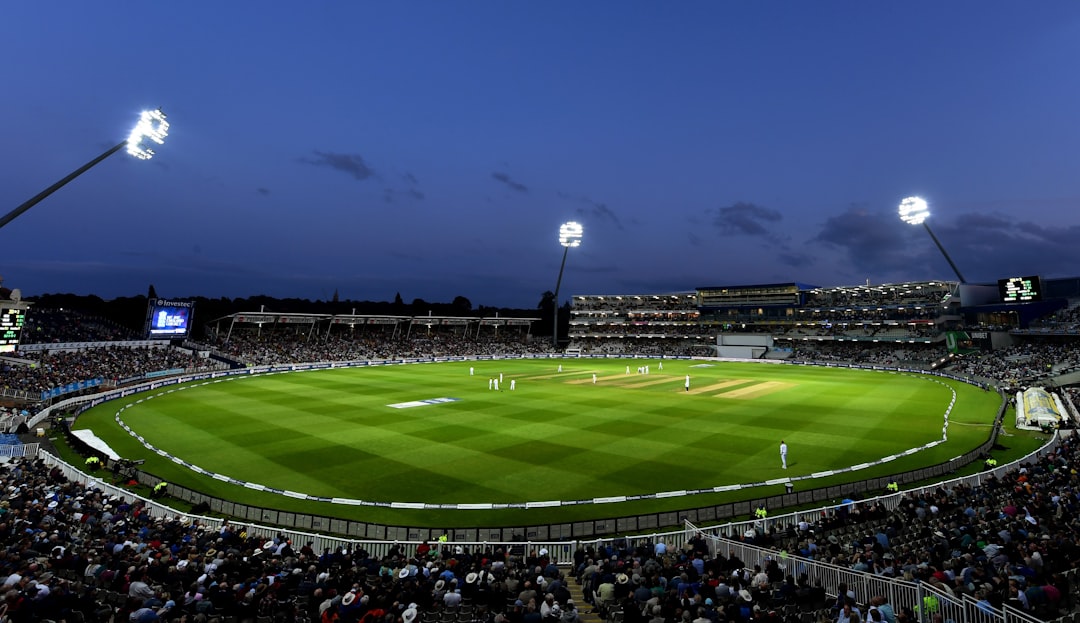
England beat Australia by two runs at Edgbaston in August 2005 — the narrowest margin in Ashes history to that point — when Steve Harmison’s short ball brushed Michael Kasprowicz’s glove with Australia three runs from victory. That single delivery turned a series, ended an era of Australian invincibility over England, and produced what is still routinely called the greatest Test series ever played. England’s 2-1 win was their first Ashes triumph since 1986-87: eighteen years of defeats, some of them humiliations, wiped out across seven weeks of cricket that neither side ever controlled for long.
Eighteen Years of Losing — and a Team Built to Stop It
The context made the series. Australia arrived as the dominant team of the age, holders of the urn since 1989, with Shane Warne, Glenn McGrath, Ricky Ponting, Adam Gilchrist and Matthew Hayden in the side. England, under Michael Vaughan, had spent two years assembling something unusual: a four-man pace attack — Harmison, Andrew Flintoff, Simon Jones and Matthew Hoggard — with genuine pace, height, swing and reverse swing spread across it, so that no phase of an innings offered Australia’s batters rest.
The first Test at Lord’s suggested nothing had changed. McGrath took nine wickets in the match, England’s second-innings resistance folded, and Australia won comfortably. What the scoreline hid was the opening morning, when England’s bowlers hit Australia’s top order with a hostility the tourists had not faced from England in a generation. The plan was visible even in defeat.
Four Tests That Never Let Go
Before Edgbaston, McGrath trod on a stray cricket ball during warm-ups and injured his ankle — one of sport’s great sliding-doors moments. Ponting, without his best bowler, chose to field first; England scored above four hundred on the first day and never surrendered the initiative until the final hour, when Warne, Brett Lee and Kasprowicz dragged Australia from hopeless to within a boundary of victory. The image of Flintoff consoling Lee amid England’s celebrations became the series’ emblem.
Old Trafford produced the reverse: England pressing for victory, Ponting playing one of the great rearguard innings — 156 across nearly seven hours — and Australia’s last pair, Lee and McGrath, surviving the final deliveries to escape with a draw. Trent Bridge swung the ledger again. England enforced the follow-on, Australia fought back, and a target of 129 became an agony resolved only by three-wicket margins and frayed nerves — a chase given its edge by the substitute fielder Gary Pratt’s direct-hit run out of Ponting, which drew the Australian captain’s fury and confirmed how deep the pressure had bitten. At The Oval, needing only a draw, England were saved by Kevin Pietersen’s 158 on the final day — an assault, launched with the series on the line, that remains among the most audacious innings played for England. The full scorecards, among the most re-read in the game’s archive, live at ESPNcricinfo.
Reverse Swing, Warne, and the Tactical Duel
England’s decisive weapon was reverse swing at high pace. Simon Jones and Flintoff, with an old ball, moved it late and both ways at speeds Australia’s batters could not adjust to; Jones’s dismissals of set batters with deliveries darting back through the gate were as influential as any single innings. The craft involved — maintaining the ball, disguising the shiny side, the late in-swerve at full length — is the same mechanism explained in any serious account of how reverse swing works, and 2005 remains its most famous sustained exhibition in a series.
On the other side stood Warne, carrying Australia’s attack after McGrath’s injury and producing one of the great losing performances: forty wickets in the series, along with vital runs. His duel with England’s left-handers, working the rough outside their off stump, was a masterclass in leg-spin’s psychological warfare — and England’s counter, using sweeps and calculated aggression rather than survival, was itself a landmark in how sides plan against wrist-spin. Batting under that pressure, session after session, was an object lesson in constructing a Test innings under siege: Michael Vaughan’s Old Trafford hundred and Marcus Trescothick’s counter-punching starts mattered as much structurally as Pietersen’s fireworks did dramatically.
What the Series Changed
The 2005 Ashes was the last Test series shown live on free-to-air television in the United Kingdom, and the audience it built — culminating in the open-top bus parade through London and MBEs for the squad — showed what Test cricket could still be as a national event. Its afterlife is double-edged: English cricket gained a generation of players and fans inspired by that summer, while the move of live coverage behind a paywall immediately afterwards became the standard cautionary tale about trading reach for revenue. Within the game, the series rehabilitated an old truth the sport keeps relearning — that fast bowling hunting in packs, and captains prepared to attack, beat attritional safety. Its place among the pivotal moments of Test history is secure precisely because it changed behaviour, not just a scoreline.
Why 2005 Still Sets the Standard
Great series need great teams, genuine jeopardy and finishes that punish the neutral. 2005 had all three across five Tests: two decided by the thinnest margins, one saved by ten wickets’ worth of nerve, one saved by a single innings of brilliance. Nearly every “greatest series” debate since — 2019’s Ashes included — ends by measuring the challenger against that summer. For newer fans, it is the perfect entry point into what five-day cricket uniquely offers: momentum that turns hour by hour, and pressure that compounds for weeks. For students of the game, it remains the reference case that in Test cricket, the side that keeps attacking when terrified usually wins.
Frequently Asked Questions
How many runs did England win by?
England won the 2005 Ashes by two runs at Edgbaston, with the final delivery from Steve Harmison brushing Michael Kasprowicz’s glove, leaving Australia three runs short of the target and the series.
What was the pivotal delivery in the final Test?
Steve Harmison’s short ball to Michael Kasprowicz at Edgbaston in August 2005 was the pivotal delivery; it skimmed the glove, eliminating the final three runs Australia needed and secured England’s series victory.
Which pace bowlers formed England’s attack?
England’s four‑man pace attack consisted of Steve Harmison, Andrew Flintoff, Simon Jones and Matthew Hoggard, whose combined speed, height, swing and reverse‑swing posed constant threats throughout the 2005 Ashes series.
When did England last win the Ashes before 2005?
England’s previous Ashes triumph occurred in the 1986‑87 series, ending an eighteen‑year period of defeats that began after their 1986 victory and concluded with the historic 2005 win.